May 9, 2026
More Important Than Keeping the Rules

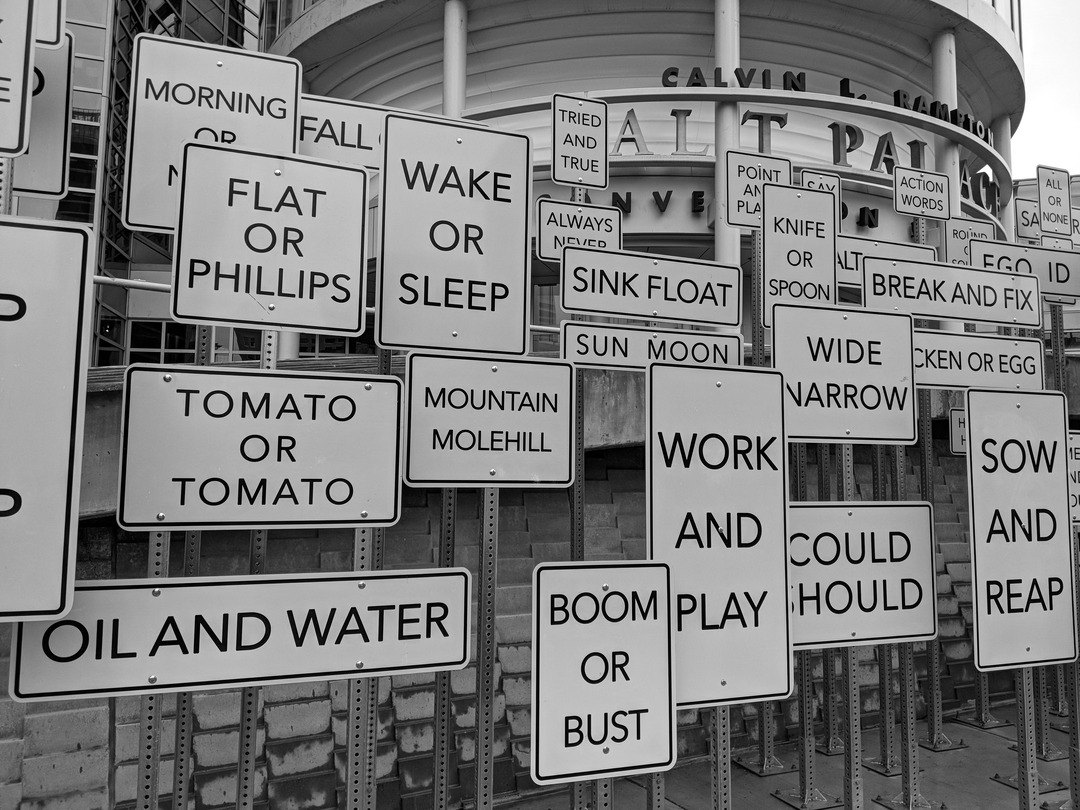
There is a common misconception that religion is all about doing the right things and avoiding the wrong things. Actually, it's more about identifying with the One who determined from the beginning what the right and wrong things are.
Leviticus 25:1-27:34; Jeremiah 16:19-17:14; 2 Corinthians 3:1-6; Ephesians 2:19-22; 1 Peter 1:1-2, 2:1-12
Click here to download a transcript of this podcast: More Important Than Keeping the Rules
Since Yeshua’s followers have the revelation of Messiah, we should live in a way that sets us apart from the world. Peter says it like this:
So put away all malice and all deceit and hypocrisy and envy and all slander. Like newborn infants, long for the pure spiritual milk, that by it you may grow up into salvation—if indeed you have tasted that the Lord is good.
As you come to him, a living stone rejected by men but in the sight of God chosen and precious, you yourselves like living stones are being built up as a spiritual house, to be a holy priesthood, to offer spiritual sacrifices acceptable to God through Jesus Christ. For it stands in Scripture:
“Behold, I am laying in Zion a stone,
a cornerstone chosen and precious,
and whoever believes in him will not be put to shame.”
So the honor is for you who believe, but for those who do not believe,
“The stone that the builders rejected
has become the cornerstone,”
and
“A stone of stumbling,
and a rock of offense.”
They stumble because they disobey the word, as they were destined to do.
But you are a chosen race, a royal priesthood, a holy nation, a people for his own possession, that you may proclaim the excellencies of him who called you out of darkness into his marvelous light. Once you were not a people, but now you are God's people; once you had not received mercy, but now you have received mercy.
Beloved, I urge you as sojourners and exiles to abstain from the passions of the flesh, which wage war against your soul. Keep your conduct among the Gentiles honorable, so that when they speak against you as evildoers, they may see your good deeds and glorify God on the day of visitation.
1 Peter 2:1-12 ESV
The Apostle certainly wanted his audience to understand how a follower of Messiah is supposed to act. That’s why he included the list of desirable behaviors in this passage and elsewhere in his epistle. It may be, however, that he was more concerned about his audience understanding why these behaviors are important. That’s the difference between the letter of the law and the spirit that gives it power. Those who live by the letter may be experts at keeping the rules, but their hearts – their motivations, attitudes, and desires – may be far different from what they show to the public. Those moved by the spirit may not keep the rules as strictly, but they never stray far from the Rule Maker. Because their identity is in him, they seek to be like him and receive his correction when he reminds them of the rules.
The rules, of course, are the commands, instructions, and laws our Creator imparted in the Torah. Christians these days are beginning to understand that the Torah as recorded by Moses is what Yeshua taught, both by word and by example, and which the prophets and apostles urged God’s people to learn and live by. We might think of Torah as the Designer’s specifications for us humans made in his image. The whole world will come to that realization eventually, as Jeremiah says:
O Lord, my strength and my stronghold,
my refuge in the day of trouble, to you shall the nations come
from the ends of the earth and say:
“Our fathers have inherited nothing but lies,
worthless things in which there is no profit.”
Jeremiah 16:19 ESV
This is why Israel is set apart from the nations. How are the nations to know how to behave and, more importantly, why they are to live according to God’s ways unless someone models it for them? That’s why God called Abraham to father the nation of Israel, which the Lord claimed as his own inheritance. Israel is holy to the Lord, distinct from all the other nations because it is God’s vehicle of redemption for all the nations.
Which gets us back to Peter’s letter. The way he writes indicates that his readers are no longer part of the nations in which they were born, but have become something different. Specifically, they become part of the Covenant Nation of Israel. That’s why he starts his letter like this:
Peter, an apostle of Jesus Christ,
To those who are elect exiles of the Dispersion in Pontus, Galatia, Cappadocia, Asia, and Bithynia, according to the foreknowledge of God the Father, in the sanctification of the Spirit, for obedience to Jesus Christ and for sprinkling with his blood: May grace and peace be multiplied to you.
1 Peter 1:1-2 ESV
Why does Peter call these people “elect exiles of the Dispersion”? Exiles from where? Dispersed from what, and to what?
We know that the Jewish people were exiled and dispersed. God said that would happen if his Chosen People of Israel failed to keep his Covenant. They did, and God’s discipline happened. For many centuries, Christians assumed the Jewish people were cut out of the Covenant, and that the church had replaced them. Then God brought resurrection to the Jewish nation of Israel in 1948, and ever since then we’ve had to rethink our theology.
Perhaps the answer is in what Peter and Jeremiah have written. The nations – including the exiles of both Houses of Israel – are coming to the Lord to confess that we all have inherited lies and have lived like prodigals, dispersed all over the earth. Now the way is open to return to our Creator, enter his Covenant of Redemption, and take our places among his set-apart people.
That’s not just a reason to keep the rules. It’s a destiny.
Cover photo by David Kuvaev, October 23, 2023, on Unsplash.
Music: "Song of Glory,” The Exodus Road Band, Heart of the Matter, 2016.
No comments yet. Be the first to say something!